 CimpactPRO Partner
Türkçeye Geç
CimpactPRO Partner
Türkçeye Geç
 Danışma Hattı
0 (850) 346 33 11
Danışma Hattı
0 (850) 346 33 11
 CimpactPro CORP
Corporate Carbon Footprint Calculation and Reporting Software.
CimpactPro CBAM
Border Carbon Regulatory Mechanism (CCRM) Declaration Software.
CimpactPro ESG
Sustainability / ESG Reporting and Management Software. (GRI)
CimpactPro CITY
Emissions Management and Reporting Software for Cities and Municipalities (GPC)
CimpactPro is a sustainability software family that covers all sectors with its modular structure developed by taking into account the specific needs of different sectors.
Explore All Sectors


With our mentoring, training and research-analysis packages, we build your capacity, finalize processes together and link your decisions to data-based, measurable results.
All Services
Accelerate standards compliance with weekly/monthly coaching and increase your teams' success in error-free implementation and on-time delivery.
Get Detailed Information
With hands-on sessions, it adapts standards and regulations to your corporate data; makes competence permanent and enables rapid implementation.
Get Detailed Information
Green maturity, awareness and GAP measurements link decisions to data and clarify the priority roadmap and KPIs.
Get Detailed InformationFrom technical guides to expert opinions, from analysis of current legislation to software support tools, CimpactPro Resources library has all the information you need to take firm steps towards your sustainability goals.


Kozyatağı Mah. İbrahim Ağa Sk. Som Plaza Kat:5 Kadıköy/İstanbul/TÜRKİYE
What is Corporate Carbon Footprint?
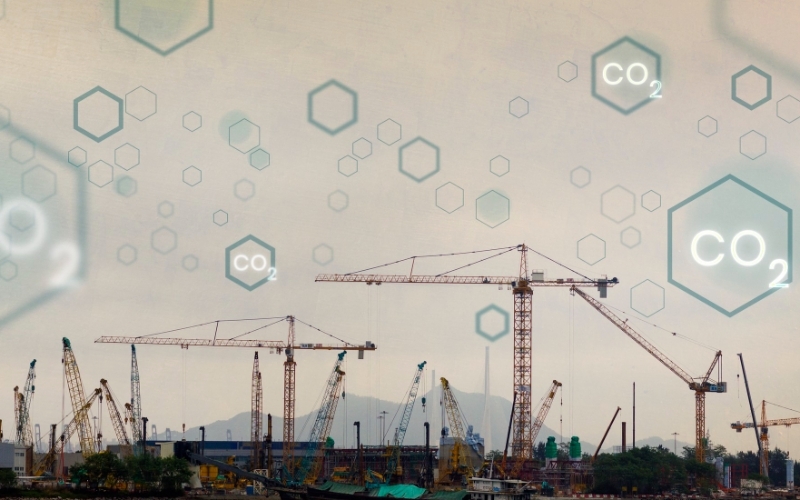


Corporate carbon footprint refers to the total greenhouse gas emissions that a company generates directly and indirectly through its activities. This concept can encompass not only energy and fuel consumption, but also procurement processes, logistics activities, business travel, waste management and the supply chain. Understanding the carbon impact of companies is therefore important not only for environmental performance, but also for operational, financial and strategic decisions.
What Does Corporate Carbon Footprint Mean?
The corporate carbon footprint reveals the total emission burden resulting from an organization's activities in a given period. The main purpose here is to make the company's environmental impact numerically visible and to determine which activities produce higher emissions. At this point, it isfirst necessary to establish the general meaning of the question ofwhat is a carbon footprint. At the corporate level, this concept covers a much broader operational structure than individual consumption habits.
The carbon footprint of companies is not limited to the fuels burned within the facility. Many activities from purchased electricity to the supply chain, from employee transportation to subcontracted logistics can be part of this picture. Therefore, the corporate carbon footprint is a comprehensive indicator that evaluates the entire value chain of the company in terms of environmental impact.
Why should companies measure their carbon footprint?
It is becoming increasingly critical for companies to measure their carbon footprint due to rising expectations and transforming ways of doing business. Making emissions visible not only fulfills the need for reporting, but also enables to identify areas for improvement, anticipate risks and develop a more controlled sustainability strategy.
Regulatory and Compliance Processes
Environmental reporting and emissions monitoring have become more important in many sectors. For companies that export, are involved in corporate supply chains or undergo certain certification processes, regular monitoring of emissions data can become a serious requirement. Therefore, corporate carbon footprinting is not only an internal management need, but also part of compliance readiness.
Customer and Investor Expectations
Customers, business partners and investors are now looking more closely at companies' sustainability performance, not just their financial results. Companies that measure and manage their carbon footprint can offer stronger transparency to their stakeholders. This can both build trust and provide a competitive advantage.
Operational Efficiency and Risk Management
Measuring emission sources often means a clearer view of energy, fuel and resource consumption. With this visibility, cost-generating areas, inefficient processes and high-impact operations can be more easily identified. At the same time, issues such as future cost pressures, supply risk and reputational risk can be managed at an earlier stage.
Which Emissions Does Corporate Carbon Footprint Cover?
The corporate carbon footprint is usually evaluated in a scope-based structure. This classification helps to distinguish between emissions under the direct control of the company and indirect impacts. Thus, both calculation and reporting become more systematic.
Scope 1 Emissions
Scope 1 emissions are direct emissions from sources that the company directly controls. This includes natural gas burned in facilities, fuel oil used in company vehicles, process emissions from production processes or generator use. This area is often one of the most visible headings, as the emission is a direct result of company activity.
Scope 2 Emissions
Scope 2 emissions refer to indirect emissions that occur during the production of energy sources such as electricity, steam, heating or cooling that the company purchases. Although the emission does not occur at the company site, it has an important place in the corporate carbon footprint calculation since the consumption belongs to the company. This scope may have a high share especially in electricity intensive enterprises.
Scope 3 Emissions
Scope 3 emissions cover other indirect emissions along the company's value chain. This can include purchased goods and services, business travel, employee transportation, waste, subcontracted transportation, distribution activities and the supply chain. While Scope 3 is often the largest and most difficult to measure, it can be a significant portion of the total impact.
How to Calculate Corporate Carbon Footprint?
Corporate carbon footprint calculation starts with determining organizational and operational boundaries. Then, activity data is collected from areas such as energy, fuel, transportation, procurement, waste and supply chain. This data is matched with the relevant emission factors and converted into carbon dioxide equivalents. Data quality, classification discipline and methodological consistency are of great importance for the healthy progress of this process on a corporate scale.
Especially in corporate carbon footprint calculation processes, data from different locations must be collected in a single center, disaggregated on the basis of scope and made reportable. Therefore, the calculation is not only a technical formula process, but also a corporate study that requires data management and process coordination.
What is the Difference Between Corporate Carbon Footprint and Product Carbon Footprint?
The corporate carbon footprint considers the total impact of all activities carried out by a company over a given period. Product carbon footprint, on the other hand, focuses on the emissions of a single product throughout its lifecycle. In other words, one measures environmental impact at the organization level and the other at the product level.
A product-based approach may require a more detailed assessment from raw material sourcing to production, packaging, transportation and lifecycle. At the organizational scale, the aim is to see the total emissions profile of the company and to establish overall mitigation strategies. The two studies can complement each other, but differ in scope and intended use.
How are Corporate Carbon Footprint Results Reported?
Corporate carbon footprint results are usually reported on a scope-based basis and the methodology used, data sources, calculation period and assumptions are clearly stated. In the reporting process, not only the total emission value, but also which activities have an impact and at what rate, the level of data quality, and in which areas estimated values are used should be clearly stated.
A well-prepared report provides decision support to the management team, transparency to stakeholders and allows for future comparisons. It is especially important that the report is traceable, consistent and documented, especially if verification or external stakeholder presentations are planned.
What are the Most Common Implementation Challenges for Organizations?
One of the most common challenges faced by organizations is the problem of data collection. If the records kept in different facilities are not in the same format, some information is tracked manually or insufficient data cannot be obtained from suppliers, the quality of the calculation may decrease. Especially in Scope 3, data access and standardization can become an important problem.
In addition, not clearly defining responsibilities within the organization, not involving different departments in the process, misclassifying emission sources and not following up-to-date methodologies also make implementation difficult. Therefore, a successful corporate carbon footprint study requires not only technical expertise but also strong coordination, data discipline and organizational ownership.