 CimpactPRO Partner
Türkçeye Geç
CimpactPRO Partner
Türkçeye Geç
 Danışma Hattı
0 (850) 346 33 11
Danışma Hattı
0 (850) 346 33 11
 CimpactPro CORP
Corporate Carbon Footprint Calculation and Reporting Software.
CimpactPro CBAM
Border Carbon Regulatory Mechanism (CCRM) Declaration Software.
CimpactPro ESG
Sustainability / ESG Reporting and Management Software. (GRI)
CimpactPro CITY
Emissions Management and Reporting Software for Cities and Municipalities (GPC)
CimpactPro is a sustainability software family that covers all sectors with its modular structure developed by taking into account the specific needs of different sectors.
Explore All Sectors


With our mentoring, training and research-analysis packages, we build your capacity, finalize processes together and link your decisions to data-based, measurable results.
All Services
Accelerate standards compliance with weekly/monthly coaching and increase your teams' success in error-free implementation and on-time delivery.
Get Detailed Information
With hands-on sessions, it adapts standards and regulations to your corporate data; makes competence permanent and enables rapid implementation.
Get Detailed Information
Green maturity, awareness and GAP measurements link decisions to data and clarify the priority roadmap and KPIs.
Get Detailed InformationFrom technical guides to expert opinions, from analysis of current legislation to software support tools, CimpactPro Resources library has all the information you need to take firm steps towards your sustainability goals.


Kozyatağı Mah. İbrahim Ağa Sk. Som Plaza Kat:5 Kadıköy/İstanbul/TÜRKİYE
What Can Be Done to Reduce the Water Footprint?
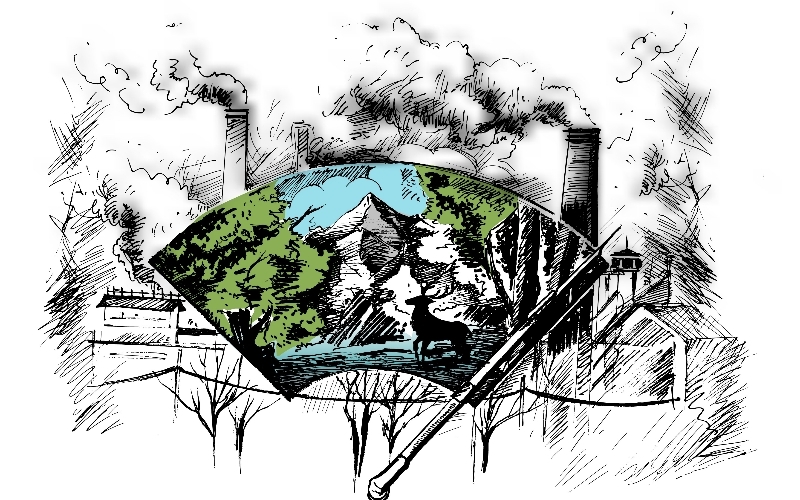


Taking steps to reduce the water footprint is not only about cutting direct water use. Many factors affect water consumption, from daily living habits to production processes, from purchasing choices to supply chain management. An effective reduction approach is therefore based on understanding where, how much and for what purpose water is used.
What is a Water Footprint and Why is it Important?
A water footprint is a measure of how much water an individual, organization, product or service consumes directly and indirectly. This concept encompasses not only the water that flows from the tap, but also the total water consumed throughout the production, agriculture, energy use and supply chain. This makes the water footprint an important indicator for resource management.
Its importance comes from the fact that water is not an unlimited resource. Considering climate pressure, drought risk, increasing production needs and population density, managing water use more carefully becomes critical both environmentally and economically.
Why Does Water Footprint Increase?
The main reason for the increase in water footprint is that invisible water consumption often goes unnoticed. Indirect use as well as direct use increases the total impact. Therefore, not only individual consumption but also production patterns, supply relationships and lifestyle choices determine the total water footprint.
Daily Consumption Habits
Domestic use, long shower times, unnecessary water consumption, intensive use of water-intensive products and unconscious shopping choices can increase individual water footprint. Behaviors that seem small in everyday life can have a serious cumulative impact when repeated over and over again.
Production and Supply Chain Impact
The amount of water used during the production of a product is often much more than the end user sees directly. Raw material production, processing, cleaning, cooling and logistics processes can increase the water footprint. Therefore, supply chain impact should not be ignored, especially in corporate structures.
What can be done to reduce individual water footprint?
For reduction at the individual level, the most intensive consumption areas should be seen first. Optimizing water use at home, preventing unnecessary consumption, choosing water efficient equipment and shopping more consciously are important steps. Making more careful choices, especially in product groups with high indirect water consumption, can yield effective results.
In addition, water should be considered not only in terms of quantity, but also as a habit. Small improvements in daily practices can lead to significant savings in the long term. The power of individual reduction comes from consistency.
How can organizations reduce their water footprint?
Reducing the water footprint for organizations starts not only with cutting consumption, but also with understanding where, in which process and at what intensity they use water. In particular, production, cleaning, cooling, washing, process management and supply relationships should be carefully considered in this respect. A corporate mitigation approach is more effective when it is data-driven and process-oriented.
Process Based Water Consumption Analysis
The first step in corporate structures is to see in which processes water consumption is concentrated. It should be clearly analyzed which production line, which plant section or which operation uses more water. Without this analysis, the mitigation steps developed may remain superficial.
Efficiency and Recovery Practices
Water-efficient equipment, reuse scenarios, closed loop systems and recovery practices play an important role in corporate reduction. Especially in water-intensive industries, even small technical improvements can lead to large savings. This creates both environmental and operational advantages.
Supply Chain Management
A significant part of the water footprint can occur outside the boundaries of the organization, along the supply chain. Therefore, it may not be sufficient to focus only on own facility data. The water management approach of suppliers, the impact of raw materials used and resource-intensive processes should be evaluated together.
How to Increase Water Efficiency in Production Processes?
To increase water efficiency in production processes, the points of use should be clarified first. Cooling, washing, process water, equipment cleaning and auxiliary operations should be analyzed separately. It is difficult to create the right improvement plan without seeing whether there is loss, leakage, unnecessary repetition and high intensity of use in these areas.
Efficiency gains can often be achieved not only through new investment but also through process improvement. A significant reduction in water consumption can be achieved when measurement, maintenance organization, automation, reuse and employee awareness work together.
What are the Environmental and Economic Benefits of Reducing Water Footprint?
In addition to reducing environmental resource pressure, reducing the water footprint can also affect the costs of organizations and individuals. Less water use means lower operating costs, less wastewater load and more controlled resource management. Especially in water-intensive sectors, this difference is felt directly as operational efficiency.
From an environmental perspective, more conscious water management contributes to reduced ecosystem pressure and a more balanced use of natural resources. Therefore , there is an indirect relationship betweenwater management and the question ofhow to reduce carbon footprint, as more efficient resource utilization often produces a positive impact on energy and emissions.
Is it Possible to Reduce without Measurement?
It is possible to set reduction targets without measurement, but this approach often yields limited results. Because without knowing what and how much is consumed, it is not clear which area is prioritized. Therefore, data is needed for the mitigation process to have a solid foundation.
This logic is actually the same in other environmental performance areas. For example, the answer to the question ofhow to calculate the carbon footprint is to first collect and correctly classify the data. The same approach applies to water footprint management: without measurement, improvement efforts are often based on guesswork.
How to Take the First Step in Water Footprint Management?
The first step is to get a clear picture of the current usage pattern. For individuals, this means reviewing their daily consumption habits; for organizations, it means process-based analysis, data collection and responsibility allocation. The clearer the start, the more effective the subsequent reduction steps will be.
The best approach is to treat the water footprint as a performance area that needs to be managed, not just as an environmental indicator. In this way, mitigation efforts can move from random suggestions to a structure that is based on concrete data and produces sustainable results.