 CimpactPRO Partner
Türkçeye Geç
CimpactPRO Partner
Türkçeye Geç
 Danışma Hattı
0 (850) 346 33 11
Danışma Hattı
0 (850) 346 33 11
 CimpactPro CORP
Corporate Carbon Footprint Calculation and Reporting Software.
CimpactPro CBAM
Border Carbon Regulatory Mechanism (CCRM) Declaration Software.
CimpactPro ESG
Sustainability / ESG Reporting and Management Software. (GRI)
CimpactPro CITY
Emissions Management and Reporting Software for Cities and Municipalities (GPC)
CimpactPro is a sustainability software family that covers all sectors with its modular structure developed by taking into account the specific needs of different sectors.
Explore All Sectors


With our mentoring, training and research-analysis packages, we build your capacity, finalize processes together and link your decisions to data-based, measurable results.
All Services
Accelerate standards compliance with weekly/monthly coaching and increase your teams' success in error-free implementation and on-time delivery.
Get Detailed Information
With hands-on sessions, it adapts standards and regulations to your corporate data; makes competence permanent and enables rapid implementation.
Get Detailed Information
Green maturity, awareness and GAP measurements link decisions to data and clarify the priority roadmap and KPIs.
Get Detailed InformationFrom technical guides to expert opinions, from analysis of current legislation to software support tools, CimpactPro Resources library has all the information you need to take firm steps towards your sustainability goals.


Kozyatağı Mah. İbrahim Ağa Sk. Som Plaza Kat:5 Kadıköy/İstanbul/TÜRKİYE
What are Clean Energy Sources?
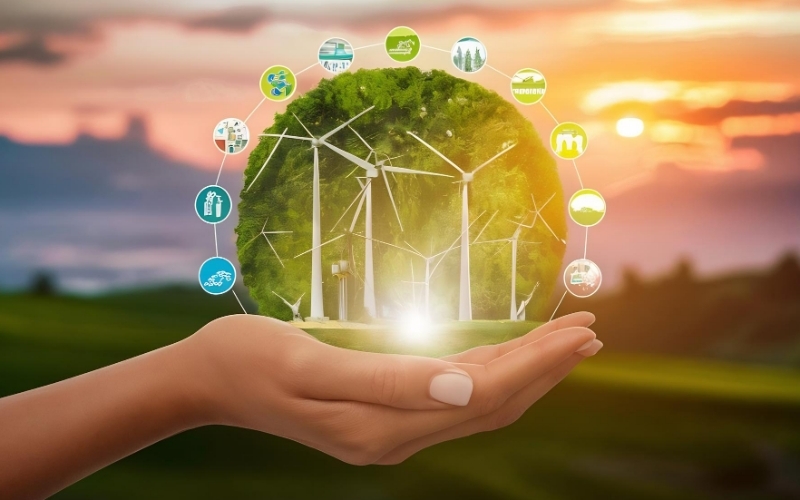


Clean energy sources are defined as sources that generate relatively low emissions during energy production and limit environmental impact. In recent years, clean energy has become much more visible in both public policies and corporate strategies due to climate change, energy security and sustainability goals.
However, the concept of clean energy does not always carry a single meaning. While some sources are considered both renewable and clean, others may create other environmental controversies even though they have low emissions. Therefore, it is necessary to get the concept conceptually right.
What is Clean Energy?
Clean energy refers to energy types that limit environmental impacts such as air pollution and greenhouse gas emissions during energy production. The main emphasis here is on a particularly low carbon intensity. For this reason, clean energy often stands out as an alternative to fossil fuels.
Clean energy is not only an environmental choice; it is also important in terms of long-term cost, energy independence and corporate risk management.
For many organizations, moving towards clean energy is no longer an optional image choice. Supply chain pressures, customer expectations and reporting frameworks have made the quality of the energy source more important.
Are Clean Energy and Renewable Energy the Same Thing?
These two concepts are often used together, but they are not exactly the same. Renewable energy refers to resources that replenish themselves in nature in a short time. Clean energy focuses on resources that have a low environmental impact during production. So an energy source may be renewable, but it may not always be considered completely clean, depending on how it is used.
On the other hand, some low-emission sources may not be renewable. Therefore, when evaluating energy types, it is necessary to look at the whole environmental impact, not just the nature of the resource.
Getting this distinction right is also important in communication. Because companies need to clearly define both the sustainability of the resource and its environmental impact when describing the energy transition.
Why Solar Energy is a Clean Energy Source?
Solar energy is considered low-emission because it does not require direct fuel combustion during electricity generation. Energy can be generated through photovoltaic systems or solar thermal applications. In particular, meeting the need for electricity from the sun instead of fossil fuels can be effective in reducing carbon intensity.
Of course, panel production, logistics and installation stages also have environmental impacts. But from an overall life cycle perspective, solar energy is in most cases a much lower emission option than fossil fuels.
How Does Wind Energy Reduce Environmental Impact?
Wind energy relies on systems that operate without using fuel to generate electricity. Therefore, it does not create direct carbon emissions during the operation phase. Increasing wind capacity can make a significant difference, especially in countries with a high weight of fossil fuels in the electricity system.
Wind energy also has dimensions such as infrastructure and land use. However, in general, it has a strong place among low-emission and clean energy options.
How should hydroelectric and geothermal energy be utilized?
Hydropower relies heavily on the movement of water and does not require direct fuel consumption. Geothermal energy utilizes underground heat. Both sources are considered clean energy in many cases. However, due to local ecosystem impacts, water regime, land use and technical structure, each project must be analyzed in its own context.
Therefore, when defining clean energy, attention should be paid not only to the amount of emissions, but also to broader environmental impacts.
Is Biomass Always Clean Energy?
Although biomass is sometimes classified as renewable and clean energy, this is not always clear. The source of the raw material used, logistics, production method and combustion efficiency can significantly change the environmental outcome. Unsustainable biomass practices can reduce the expected benefits.
Therefore, instead of generalizing for biomass, the feedstock source and life cycle impact should be considered together.
While biomass can be a meaningful solution in some waste-based systems, improper sourcing can create new environmental pressures. Therefore, the acceptance of "clean" biomass is conditional.
How does the use of clean energy affect emissions?
Shifting to clean energy has the potential to reduce emissions, especially from electricity and heat generation. Organizations can reduce their overall emissions by changing the energy mix, supporting efficiency practices and reducing fossil fuel dependency.
For this reason , energy transition is always an important topic in the answers to the question ofhow to reduce carbon footprint. Clean energy can have a direct impact on Scope 2 emissions in particular.
How should companies plan their transition to clean energy?
Companies should first see their current energy consumption structure, then understand which processes have electricity and fuel-based emission intensity. Options such as renewable electricity supply, energy efficiency, process transformation and site-based energy investments can then be considered.
This perspective is a natural part ofcorporate carbon footprint management. Because energy choice is one of the most important factors determining the corporate emissions profile.
Successful transition plans start with an analysis of current energy use and proceed with short, medium and long-term goals. Energy efficiency, clean procurement, site investment and data tracking are more powerful when considered together.