 CimpactPRO Partner
Türkçeye Geç
CimpactPRO Partner
Türkçeye Geç
 Danışma Hattı
0 (850) 346 33 11
Danışma Hattı
0 (850) 346 33 11
 CimpactPro CORP
Corporate Carbon Footprint Calculation and Reporting Software.
CimpactPro CBAM
Border Carbon Regulatory Mechanism (CCRM) Declaration Software.
CimpactPro ESG
Sustainability / ESG Reporting and Management Software. (GRI)
CimpactPro CITY
Emissions Management and Reporting Software for Cities and Municipalities (GPC)
CimpactPro is a sustainability software family that covers all sectors with its modular structure developed by taking into account the specific needs of different sectors.
Explore All Sectors


With our mentoring, training and research-analysis packages, we build your capacity, finalize processes together and link your decisions to data-based, measurable results.
All Services
Accelerate standards compliance with weekly/monthly coaching and increase your teams' success in error-free implementation and on-time delivery.
Get Detailed Information
With hands-on sessions, it adapts standards and regulations to your corporate data; makes competence permanent and enables rapid implementation.
Get Detailed Information
Green maturity, awareness and GAP measurements link decisions to data and clarify the priority roadmap and KPIs.
Get Detailed InformationFrom technical guides to expert opinions, from analysis of current legislation to software support tools, CimpactPro Resources library has all the information you need to take firm steps towards your sustainability goals.


Kozyatağı Mah. İbrahim Ağa Sk. Som Plaza Kat:5 Kadıköy/İstanbul/TÜRKİYE
Fit for 55 and CBAM: Business Impacts of Climate Policies
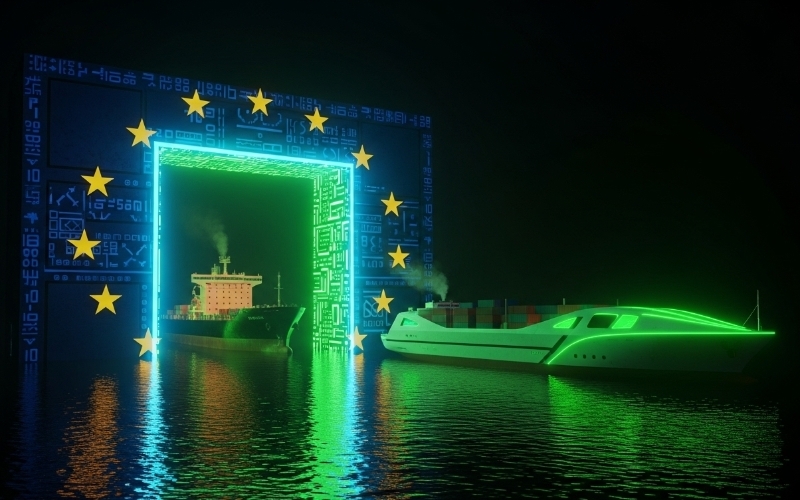


Green Transformation and CBAM: shifting Global Trade Balances with 55 Compliant
The European Union's ambitious climate goals such as "Fit for 55" and 2050 Net Zero are no longer just domestic policies that concern continental Europe, but are rewriting the restructuring of global trade with powerful instruments such as the Border Carbon Adjustment Mechanism (CBAM). What does this new paradigm mean for details, exporters and personalities? Let's examine the dynamics and global developments from this process.
Big Goals and the Birth of an Instrument: Why CBAM?
Two major goals of the European Union are driving this process forward: "Fit for 55" to achieve the lowest emissions of 55% below 1990 levels by 2030 and net zero carbon by 2050. The EU realized that these ambitious goals could not be achieved through activities on the continent alone.
A problem arose: while the EU was imposing financial burdens on its own hand, some far-flung and companies began shifting production to where there were fewer restrictions. This situation was called "carbon leakage". CBAM was created precisely to respond to these two fundamental needs: Both to ensure the EU's climatic accessibility and to protect Europeans from unfair competition by preventing carbon leakage.
New Era in Customs: Product Value is No Longer Just Price
With CBAM, the value of a product is no longer only measured by its price, but also by its characteristics - its carbon footprint. This signals the beginning of a new era in customs. The basic formula of CBAM is to equalize the price of cheap but earth-damaging high-carbon products with environmentally friendly alternatives through additional taxes. This incentivizes tourists' choice based on intensity, not just price.
This warming process, which started with the monitoring of the faster-than-expected window of climate change, accelerated with the introduction of financial and tax obligations by CBAM. Firms now see that complying with CBAM is not just a registration, but also an opportunity to increase market payments and sell more.
Reshaping Global Production and Justice
Because Europe is the world's largest market, it directly involves the global forces of global production. CBAM means that all items of goods destined for Europe are green tracked. This transformation affects not only exporters but also their entire supply chain, bringing to life the EU's Green Deal principle of "leaving no one behind".
So, does this mean that the EU is imposing its own policies? In fact, the CBAM demonstrates a range of fairness and a fairness gap in the pass-through of unfair competition on refrigerants coming from outside, ensuring that they are subject to the same tax burden as products in Europe. By normalizing the inequalities arising from different types of internal systems and creating a standard structure, CBAM has become the manager at the border crossing of the green use of this chapter. This helps to reduce emissions not only in Europe but also in countries like Turkey.
Conclusion
As a result, if "Fit for 55" is a goal that is being created, CBAM is a force that ensures this goal remains on paper. Rather than resisting CBAM active in this new era, it will be vital for strong powers to use it as a created tool in their green transformation journey.