 CimpactPRO Partner
Türkçeye Geç
CimpactPRO Partner
Türkçeye Geç
 Danışma Hattı
0 (850) 346 33 11
Danışma Hattı
0 (850) 346 33 11
 CimpactPro CORP
Corporate Carbon Footprint Calculation and Reporting Software.
CimpactPro CBAM
Border Carbon Regulatory Mechanism (CCRM) Declaration Software.
CimpactPro ESG
Sustainability / ESG Reporting and Management Software. (GRI)
CimpactPro CITY
Emissions Management and Reporting Software for Cities and Municipalities (GPC)
CimpactPro is a sustainability software family that covers all sectors with its modular structure developed by taking into account the specific needs of different sectors.
Explore All Sectors


With our mentoring, training and research-analysis packages, we build your capacity, finalize processes together and link your decisions to data-based, measurable results.
All Services
Accelerate standards compliance with weekly/monthly coaching and increase your teams' success in error-free implementation and on-time delivery.
Get Detailed Information
With hands-on sessions, it adapts standards and regulations to your corporate data; makes competence permanent and enables rapid implementation.
Get Detailed Information
Green maturity, awareness and GAP measurements link decisions to data and clarify the priority roadmap and KPIs.
Get Detailed InformationFrom technical guides to expert opinions, from analysis of current legislation to software support tools, CimpactPro Resources library has all the information you need to take firm steps towards your sustainability goals.


Kozyatağı Mah. İbrahim Ağa Sk. Som Plaza Kat:5 Kadıköy/İstanbul/TÜRKİYE
Agenda for Exporters: What is Border Carbon Regulation (CBAM) and what will it change?
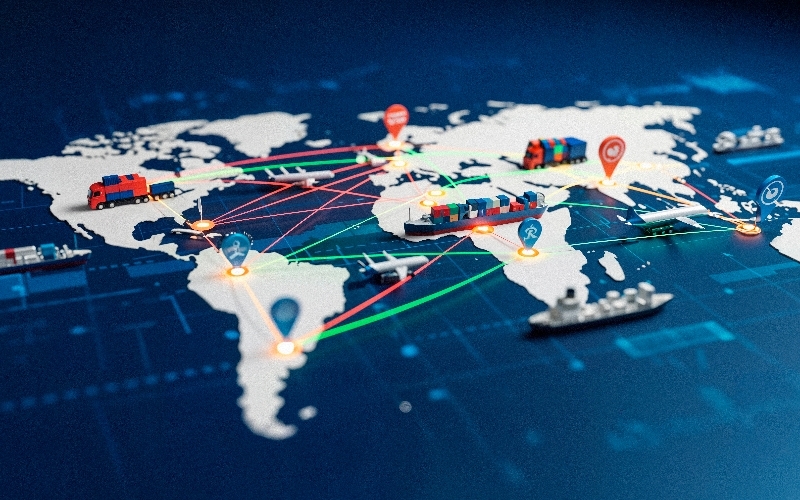


The New Competitive Landscape: CBAM Challenges for Exporters and Ways to Make a Difference in Global Trade
The European Union's Border Carbon Arrangement (CBAM), implemented in line with the Green Deal goals, is reshaping the rules of global trade. This mechanism, which is especially critical for companies exporting to Europe, brings radical changes in many areas from competition to supply chains. So, what exactly is CBAM and how does it affect exporters, global supply chains and production locations?
What is CBAM and How Does It Affect Exporters?
CBAM (Carbon Border Adjustment Mechanism) is a mechanism that the European Union calls "Carbon Adjustment at the Border". Its main purpose is to protect the competitiveness of environmentally friendly manufacturing firms within Europe.
Producers in Europe were facing high costs for investing in cleaner energy and green technologies. Previously, however, products from foreign markets such as Turkey, China or Russia could enter the European market without any environmental audits. This created an unfair competitive environment for European producers.
CBAM is stepping in to restore this balance. It is now mandatory to calculate and declare the embedded carbon emissions of products to be sold to the European Union. After paying an additional fee determined according to these emission values, the products can pass through customs. In this way, it is aimed to create a fair competitive environment between producers within the EU and exporters outside.
Impact of CBAM on Global Supply Chains and Production Locations
Policies such as CBAM have the potential to profoundly affect global supply chains and production patterns. For Turkey, this situation holds both opportunities and risks.
Positive Aspects
If a producer in Turkey makes environmentally friendly production, regularly measures its emissions and makes improvements, its competitiveness in the European market will increase significantly. Because the gap that will arise when companies that cannot meet these standards withdraw from the market will be filled by environmentally friendly producers who are prepared.
Negative Aspects
Companies that have been exporting to Europe for many years but have ignored environmental standards and emission measurements are at risk of losing market share and going out of business.
Geographical proximity is also becoming an important advantage. Countries close to Europe, such as Turkey, are in an advantageous position thanks to lower indirect emissions from transportation. Therefore, CBAM is not only a necessity for Turkey, but also a strategic opportunity to gain a stronger foothold in the European market and accelerate the transition to green production models.
Which sectors are covered by CBAM in the first phase?
CBAM has targeted the most energy and emission intensive sectors in the first phase. The number of sectors, which was five when it was first announced, was later increased to six by adding one more. These sectors included in the transition process are as follows:
- Iron and Steel
- Cement
- Fertilizer
- Electricity
- Aluminum
- Hydrogen (added later)
The transition process is planned to be completed by the end of 2025, after which the taxation process will begin. In the long term, it is envisaged that many other sectors will be included in this system in line with the 2030 targets.